Metal keycaps
CAPTOKTOK · Updated 2026-10-30
Keycaps › Material keycaps
Fourteen metal keycaps, from aluminium and steel to verdigris bronze and bismuth, each with its own ring or clink. Seven open Metal Workbench.
Metal keycaps cover the kitchen drawer and the workshop as much as the jeweller's bench: light aluminium, plain and stainless steel, copper, brass and cast iron, the precious metals, and a handful of surfaces that only appear once a metal has aged or been treated. At fourteen keycaps it is the largest material family, and every one has its own sound, chosen from several takes on each press and unaffected by the switch setting.
Across this family the length of a sound changes as much as its pitch. Brass and copper ring on after the press, like a struck bowl or a pan; silver and the two Legendary keycaps are bright and clear; stainless steel gives a quick, light tick. At the other end, lead and cast iron land with a short, dull clunk that hardly rings at all, and rusted iron adds a dry, gritty edge. A board of mixed metals sounds like a set of small bells, some of them damped.
On a board the base metals read as cool greys and the warm ones as gold, copper and brown, with the aged surfaces, rust and green verdigris, adding texture. The two Legendary keycaps carry colours that come from no paint or dye, only from oxide films so thin that they colour light by interference. The rarities are evenly spread: four Uncommon (Aluminum, Steel, Copper and Stainless Steel), four Rare (Brass, Cast Iron, Silver and Lead), four Epic (Gold, Bronze, Rusted Iron and Verdigris Bronze) and two Legendary (Bismuth and Oxidized Niobium). Collect seven different metal keycaps to open Metal Workbench, a workshop bench laid out with tools.
- Keycaps
- 14
- Rarities
- Uncommon 4 · Rare 4 · Epic 4 · Legendary 2
- Sound
- Its own sound
- Moods
- Metal Workbench: Collect 7 of the 14 Metal keycaps
Its Legendary and Mythic keycaps count toward the crown moods: Gesso & Bole (5), Gold Leaf (15), Burnished Gold (30) of the 56
All 14 Metal keycaps
Press Listen to hear a keycap as the game plays it; each press picks one of its takes.
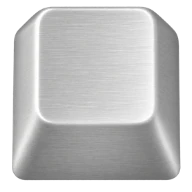
AluminumUncommon
Flat silver-grey with fine brushed hairlines. Aluminium is light for a metal, and the sound matches: a clean, bright tap with only a short ring after it.
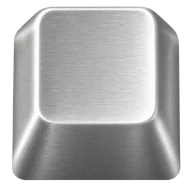
SteelUncommon
Cool satin steel over a gently squared, shallow curve. Its press is a firm, cold clink, harder and weightier than the aluminium beside it.
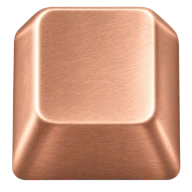
CopperUncommon
Soft pinkish copper with the faint lines of rolled sheet. The sound has the ring of a copper pan: rounded, warm and a little hollow.
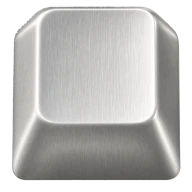
Stainless SteelUncommon
Bright silver-grey with straight brushed lines; chromium in the alloy forms a thin film that keeps rust away. The press is a quick, light, spoon-like tick.
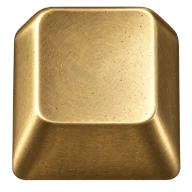
BrassRare
Warm brass-yellow with shallow, rounded dimples. Pressed, it rings like a small bowl, a warm note that hangs in the air for a moment afterwards.
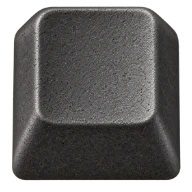
Cast IronRare
Dark charcoal with the fine, sandy texture a casting mould leaves behind. Its sound is a heavy, blunt clunk that stops almost as soon as it starts.
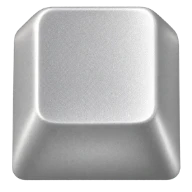
SilverRare
Silver-white with a restrained, quiet lustre, polished but not glaring. The sound is a fine, bright ring, clearer and lighter than the gold.
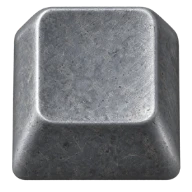
LeadRare
Blue-grey with a low sheen and a cloudy patina. Lead is soft and heavy and barely rings, so its press is a dull, short thud with almost no tail.
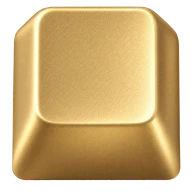
GoldEpic
Warm gold with a soft satin finish rather than a mirror shine. Gold is heavy and soft for a metal, and its press is a rich, rounded clink.
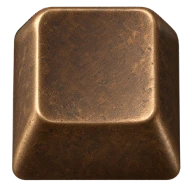
BronzeEpic
Deep brown bronze with the shallow, uneven grain of age. Bronze, mostly copper with some tin, has long been cast into bells; this keycap gives a warm, resonant clang.
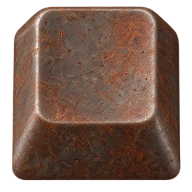
Rusted IronEpic
Iron under a thin skin of red-brown oxide, the rust that forms where iron meets water and air. Its press is rough and gritty, a dry clank with a scratchy edge.
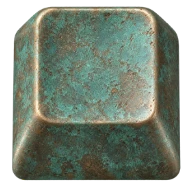
Verdigris BronzeEpic
Bronze under a blue-green film of verdigris, the copper patina that builds up over years of wind and rain on old statues and roofs. A press gives a muffled, mellow clang.
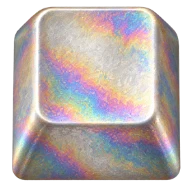
BismuthLegendary
Silver washed with rainbow oxide. As bismuth cools from the melt, a thin oxide film forms whose thickness splits light into colours, like oil on water. It rings brightly.
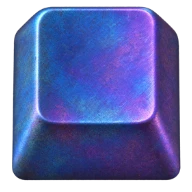
Oxidized NiobiumLegendary
Shifting from blue to violet with no dye at all: niobium is anodised, an electric current growing a clear oxide layer whose thickness sets the colour. Its press is a clean, glassy ring.